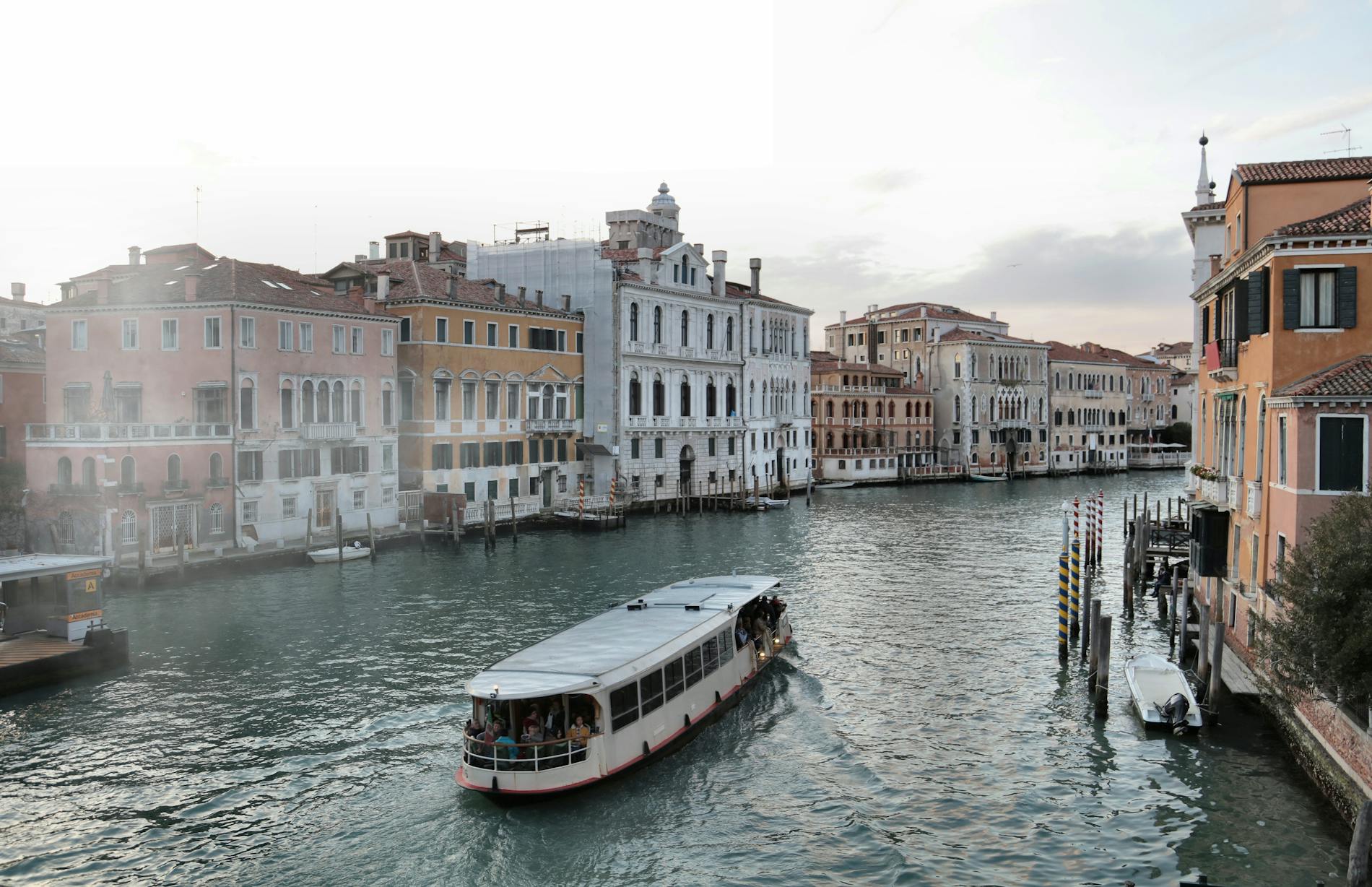
When people search for ferries in Venice, they often mean three different things: international passenger ferries to Croatia or Slovenia, local vehicle ferries inside the lagoon, and ordinary public water transport. These are not the same. In practical terms, the real ferry network linked to Venice today falls into two main groups: seasonal international high-speed catamarans and ACTV lagoon ferry-boat lines for vehicles and passengers. The regular vaporetto network and the Alilaguna airport boats are useful, but they are usually treated separately from the ferry routes most travelers mean when they ask what ferries run to and from Venice.
International ferries to and from Venice
The main international ferry services connected with Venice are the fast passenger routes between Venice and the northern Adriatic coast. The official route lists published by Adriatic Lines and Venezia Lines show the same core network: Venice–Poreč, Venice–Rovinj, Venice–Pula, Venice–Umag, and Venice–Piran. These are sold as high-speed crossings rather than classic overnight ferries, and they are aimed at foot passengers making day trips or one-way journeys between Venice and Istria or the Slovenian coast.
Venice–Poreč ferry
The Venice–Poreč route is one of the standard ferry links between Venice and Istria. Adriatic Lines lists it among its current Croatia–Venice routes, and Venezia Lines includes Poreč among its regular North Adriatic destinations. This route is especially practical for travelers who want the shortest-feeling connection between Venice and western Istria, either as a day trip or as part of a longer overland-and-sea itinerary.
Venice–Rovinj ferry
The Venice–Rovinj ferry is another core seasonal route and one of the most attractive for leisure travelers because Rovinj is one of the best-known resort towns on the Istrian coast. Both operator networks include it. In practice, this is a straightforward sea connection for travelers who want to avoid a longer land route through Trieste and across the Croatian border.
Venice–Pula ferry
The Venice–Pula ferry serves the southern part of Istria and is useful for travelers heading to a larger Croatian city with stronger onward bus and regional travel connections. Adriatic Lines lists Pula among its Venice routes, and Venezia Lines also includes it in its regular network. Because Pula is farther south than Poreč or Rovinj, this is one of the crossings where total travel time can feel more substantial, even though the service is still sold as a fast catamaran link rather than a slow conventional ferry.
Venice–Umag ferry
The Venice–Umag route is another official seasonal link between Venice and Istria. It is usually attractive for travelers staying in the northwestern part of the peninsula, close to the Slovenian border. Like the other services in this group, it is designed as a passenger connection rather than as a drive-on car ferry, so it works best for people traveling light or combining the crossing with local transfers on land.
Venice–Piran ferry
The Venice–Piran route is the Slovenia option in the same ferry network. Both Adriatic Lines and Venezia Lines include Piran among their Venice-linked destinations. This is the most useful sea route for travelers who want to combine Venice with the Slovenian coast without backtracking overland. It is also one of the clearest examples of why these services are better understood as seasonal high-speed passenger ferries than as traditional cruise-style or roll-on/roll-off ferry transport.
Which operators run these routes?
Two names matter most here: Adriatic Lines and Venezia Lines. Adriatic Lines says its Venice-linked services run from May to early October, with daily return and one-way tickets available on the Croatia/Slovenia routes. Venezia Lines says its North Adriatic service runs between April and October and uses two high-speed vessels on the Venice, Croatia, and Slovenia network, with crossing times of roughly 2 hours 30 minutes to 4 hours, depending on the destination.
That difference in season matters. It means Venice does not have a single year-round international ferry pattern in the way some other Adriatic cities do. Instead, the Venice international ferry offer is mostly a spring-to-autumn fast-ferry market tied to tourism and cross-border leisure travel. If you are traveling outside the main season, you need to check the operator schedule directly rather than assume the route will be running.
Where do international ferries leave from in Venice?
For the Croatia/Slovenia ferry services, the practical Venice departure point is San Basilio. Adriatic Lines states that all of its Venice ferries depart from San Basilio Cruise Terminal, at Fondamenta Zattere al Ponte Lungo. Venezia Lines also directs passengers to San Basilio port and explains how to reach it from Piazzale Roma, Tronchetto, and Santa Lucia railway station. This is important because many travelers wrongly expect a road-access ferry terminal outside the historic city, when in fact the check-in point is already inside Venice.
Both operators also make it clear that these crossings work like border-crossing passenger services, not like local boats. Adriatic Lines tells passengers to arrive at least 60 minutes before departure and to carry a valid passport or EU identity card, because border control applies. Venezia Lines says check-in starts 60 minutes before departure and closes 15 minutes before departure.
Local ferry-boat lines inside Venice Lagoon
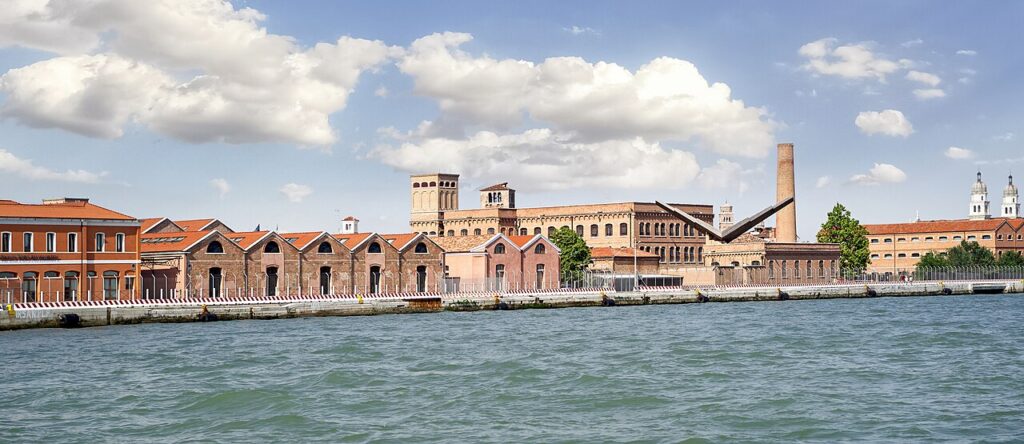
Venice also has real ferries inside the lagoon, but these are very different from the international catamarans. ACTV, the public transport operator, runs Ferry-Boat services for vehicles and passengers on two routes: Line 17, which connects Tronchetto with Lido San Nicolò and also links Lido with Punta Sabbioni on the relevant section, and Line 11, which connects Alberoni on the Lido with Santa Maria del Mare on Pellestrina. These are genuine lagoon ferries used for practical mobility, especially where cars, scooters, and service vehicles need to cross water.
ACTV Line 17: Tronchetto–Lido–Punta Sabbioni
Line 17 is the main vehicle ferry most visitors notice first, because it links the road-access side of Venice at Tronchetto with Lido San Nicolò. ACTV says vehicles and passengers can use it, and online booking is available for vehicle space on Route 17. Tickets are one-way, and the vehicle ticket does not include the driver or passengers, who need separate tickets. This line matters most for anyone moving a vehicle between the mainland road system and the Lido, or continuing toward the Cavallino/Punta Sabbioni side.
ACTV Line 11: Alberoni–Pellestrina
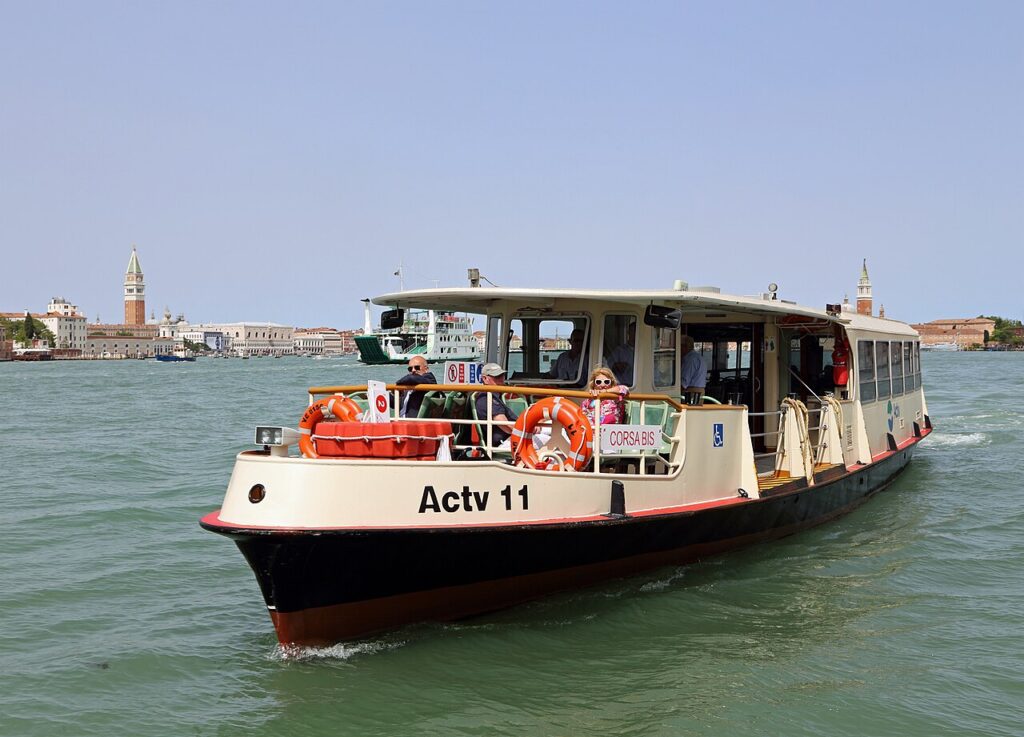
Line 11 is the second important lagoon ferry line. It links Alberoni, on the southern end of the Lido, with Santa Maria del Mare on Pellestrina. This is a more local route than Line 17, but it is part of the real ferry geography of Venice and matters for travelers exploring the barrier islands beyond the historic center. ACTV classifies it in the same Ferry-Boat family as Line 17 and sells the service for vehicles and passengers on a one-way basis.
Are these car ferries?
Inside the lagoon, yes: the ACTV Ferry-Boat lines are explicitly for vehicles and passengers. For the Croatia and Slovenia services, not really. Those international routes are marketed as high-speed catamarans, and the operator guidance is built around city-center terminals, foot-passenger check-in, luggage, border control, and onward walking or local transport. In practice, they are passenger ferry services rather than roll-on/roll-off car ferries.
Rules and practical details
For the ACTV ferry-boat system, dogs are allowed free of charge, one per passenger, but they must be on a leash and muzzled, unless they are guide dogs. ACTV also states that, during the crossing, passengers are not allowed to remain inside vehicles. Route 17 vehicle space can be booked online, but the booking does not replace the ticket itself, which must still be collected at the ferry terminals.
For the international routes, Venezia Lines states that bicycles can be carried for a supplement, and both Venezia Lines and Adriatic Lines emphasize normal cross-border travel rules. That means you should expect travel-document checks and should not treat these departures like an informal local boat ride.
One more thing: Venice Access Fee for day visitors
If you arrive in Venice by ferry for a same-day visit, there is one extra point to check in advance. Venice’s official Access Fee portal says that, on specific 2026 dates and times, entry into the historic city is subject to the Venice Access Fee, generally €5 if paid by the fourth-last day before access and €10 if paid later. Travelers staying in accommodation within the Municipality of Venice fall under the official exemption or exclusion system rather than paying in the same way as day visitors.
Official sources worth checking before booking
For the most reliable current information, use ACTV Ferry-Boat for lagoon vehicle ferries, Adriatic Lines for the Croatia/Slovenia fast-ferry schedule and Venice terminal details, Venezia Lines for route seasonality and San Basilio information, and the official Venice Access Fee portal if you are arriving for a day trip.