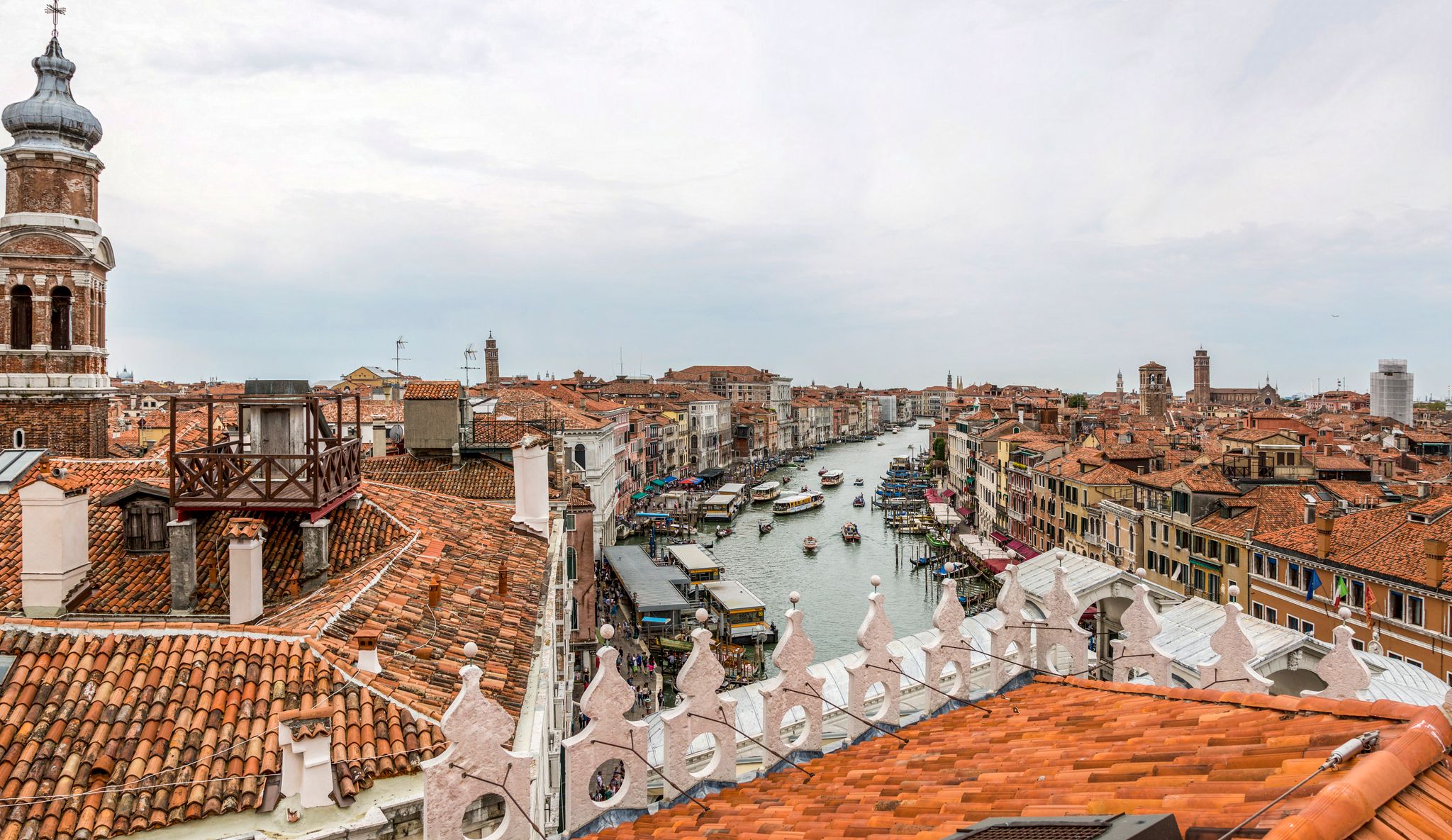
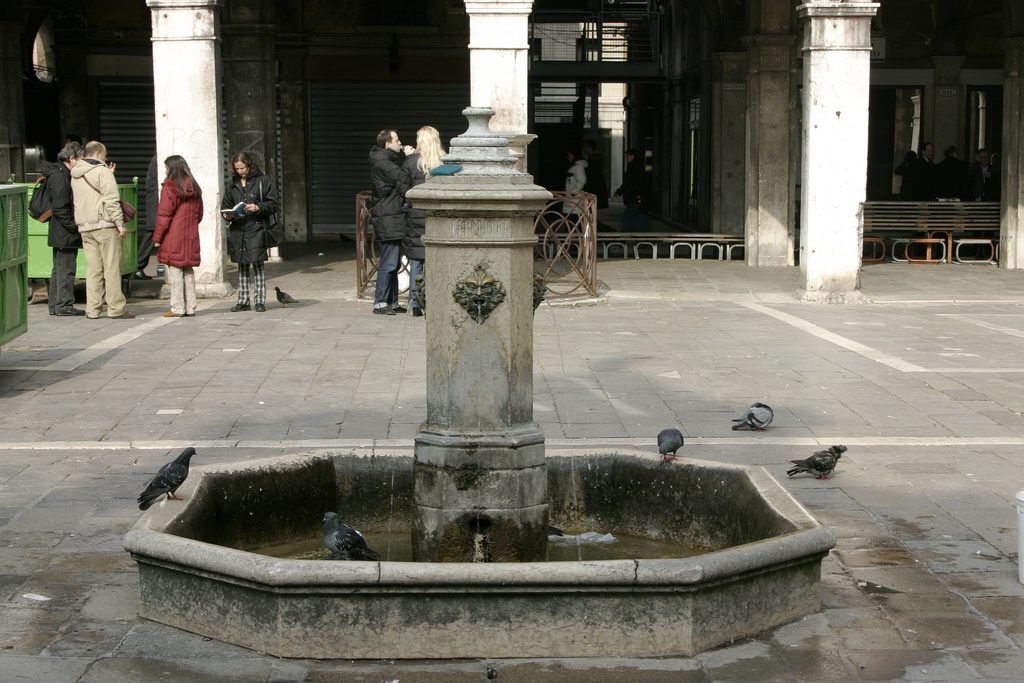
Yes. Water from Venice’s public drinking fountains is generally safe to drink, unless there is a sign saying “acqua non potabile”. The small fountains found in many streets and squares are connected to Venice’s public water network. The water is essentially the same municipal drinking water that comes from taps in apartments, hotels and restaurants. It does not come from the canals.
Where Does Venice’s Drinking Water Come From?
Most of Venice’s drinking water comes from underground aquifers on the mainland, mainly in the Veneto region.
The water is pumped from deep wells, treated when necessary and transported through the public aqueduct to the historic centre and the lagoon islands. Some parts of the wider water network can also use treated surface water from rivers such as the Sile.
So, although Venice is surrounded by lagoon water, the water you drink comes from completely separate freshwater sources.
Who Checks the Water Quality?
The water system is managed by Veritas, the public utility company responsible for water services in Venice and surrounding municipalities.
Veritas regularly takes samples and tests the water for bacteria, metals, pesticides, PFAS and many other substances. Water quality is also checked by public health and environmental authorities, including local health services and ARPAV, the environmental protection agency of Veneto. Recent published tests show that Venice’s public drinking water meets the legal standards for potable water.
Have There Been Water Poisonings in Venice?
There have been no widely reported recent citywide poisoning outbreaks linked to Venice’s municipal drinking-water system.
This does not mean that problems can never occur in an individual building because of old private pipes or internal plumbing, but the public network itself is regularly monitored. Reports about contaminated rivers, lagoon water or private wells should not be confused with Venice’s public drinking-water supply.
How Did Venetians Get Drinking Water in the Past?
Before the modern aqueduct, getting fresh water in Venice was much more difficult. Venice is built in a salty lagoon, so ordinary wells could not simply be dug into the ground. Instead, Venetians created large underground rainwater cisterns beneath squares and courtyards.
The stone structures that can still be seen in many Venetian squares are called vere da pozzo. They look like wells, but many were actually openings above sophisticated rainwater collection systems.
The system worked quite simply:
- Rainwater flowed from roofs and paved squares into underground collection points.
- Sand filtered the water, while layers of clay helped keep salty lagoon water out.
- The filtered water collected around a central shaft and was lifted with buckets.
When rainfall was not enough, fresh water was also brought to Venice by boat from the mainland.
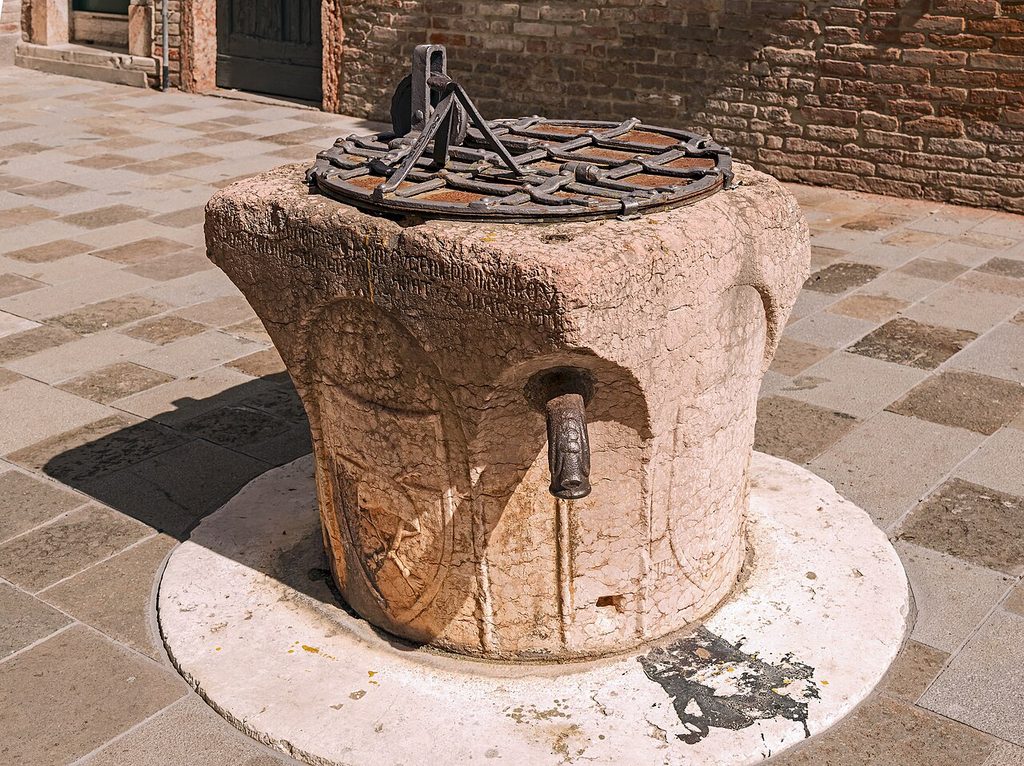
Didier Descouens, CC BY-SA 4.0 https://creativecommons.org/licenses/by-sa/4.0, via Wikimedia Commons
Why Are Venice’s Old Wells Closed Today?
Venice opened its modern aqueduct in 1884, making the old rainwater cisterns unnecessary. Most historic wellheads were later sealed, covered with metal or otherwise closed for safety. That is why today you can see hundreds of old wells around Venice, but you cannot use them. They are now part of the city’s historical landscape rather than its drinking-water system.
Should You Buy Bottled Water in Venice?
Usually, no. Venice’s tap water is drinkable, and public fountains are a convenient free source of drinking water. Carrying a reusable bottle is often enough for a full day of walking around the city. Just remember one simple rule: use proper public drinking fountains and avoid any fountain marked “acqua non potabile”.