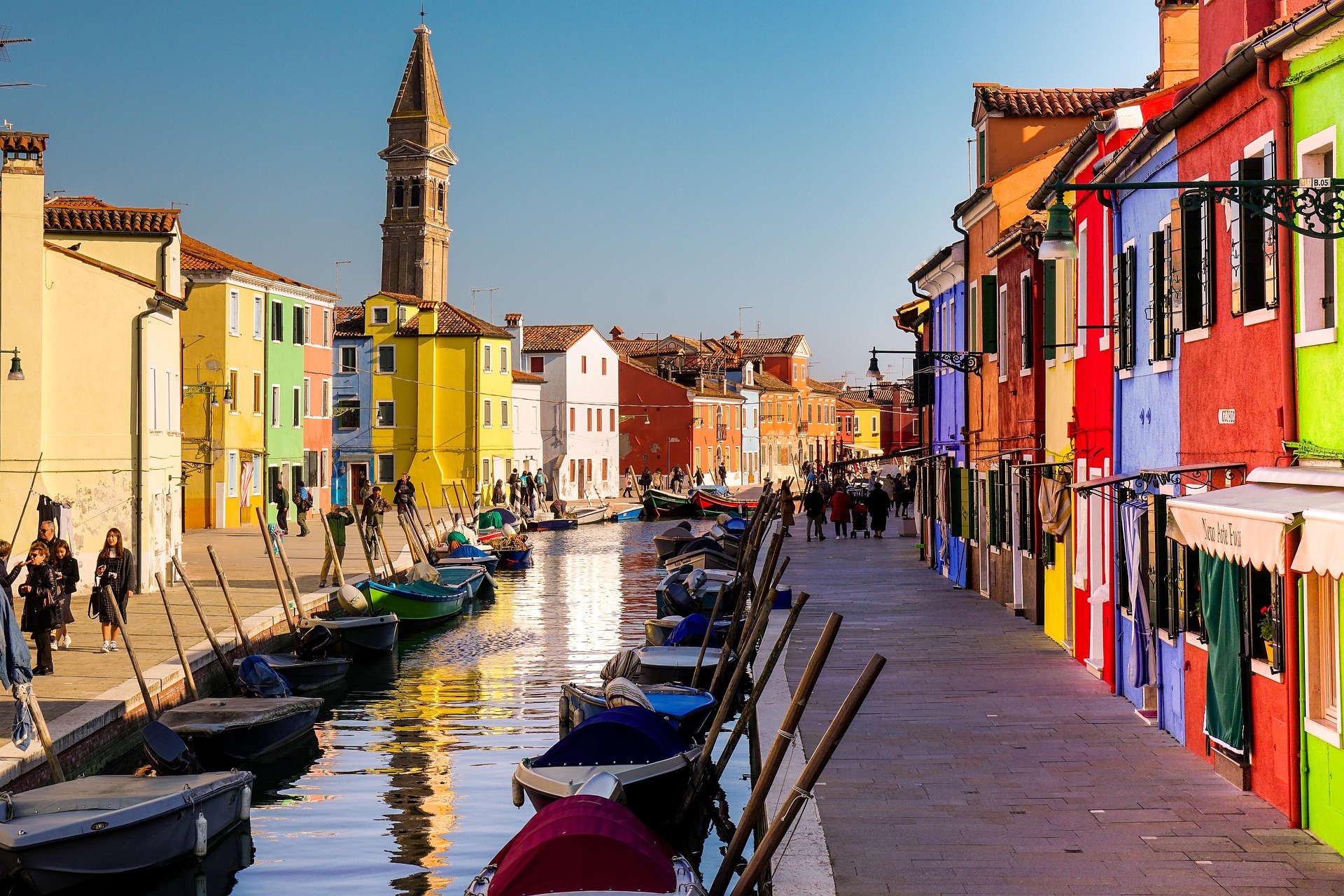
Burano is one of the most recognizable islands in the Venetian Lagoon. Its narrow canals are lined with houses painted in bright shades of blue, red, yellow, green and pink, while fishing boats are still moored outside many homes. The island is also famous for traditional handmade lace, a craft that has been associated with Burano for centuries. Burano is small enough to explore in a few hours, but it is worth staying longer than most organized tours allow.
How Burano Developed
Burano lies in the northern part of the Venetian Lagoon, around seven kilometres northeast of central Venice. Settlement in this part of the lagoon grew during the early Middle Ages, when people moved from the mainland to safer islands during periods of invasion and political instability.
Fishing became one of the main occupations of local residents. Unlike central Venice, Burano never developed monumental palaces on a large scale. Its character was shaped instead by small houses, canals, fishing families and local crafts.
Why Are Burano’s Houses So Colorful?
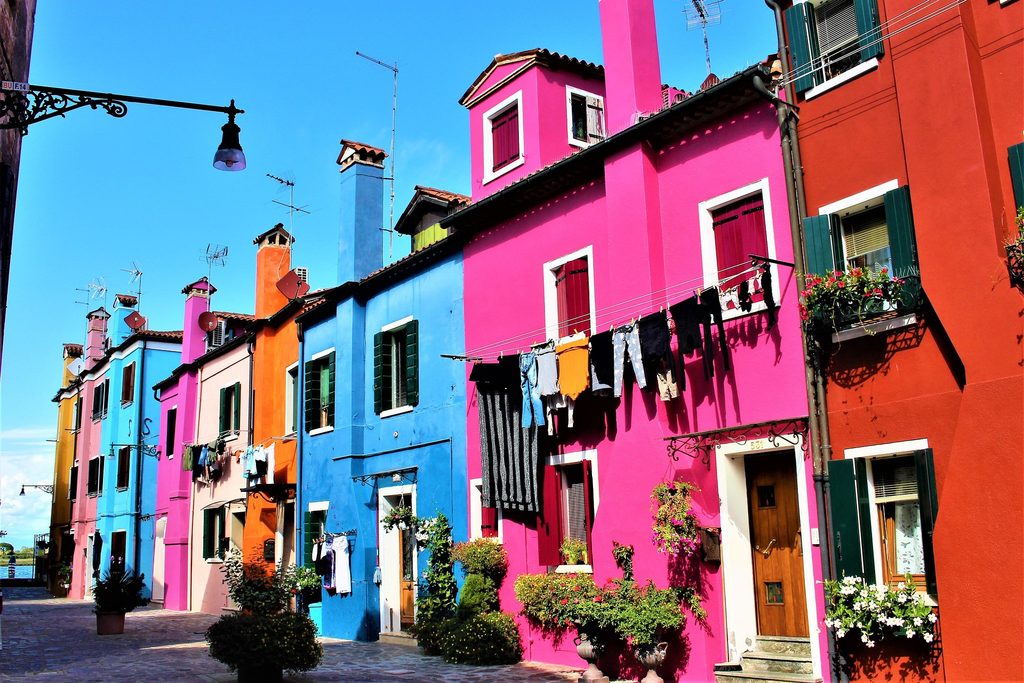
The colourful houses are now the island’s most famous feature. A popular story says fishermen painted their homes in bright colours so they could identify them when returning through the lagoon fog.
The exact origin of this tradition is difficult to prove, but colour also served a practical purpose by clearly separating neighbouring properties. Today the appearance of Burano is protected, and homeowners cannot simply choose any colour they want when repainting a historic house.
The best way to appreciate the colours is to leave the busiest route between the vaporetto stop and Piazza Galuppi. Smaller canals often provide better photographs and a more peaceful atmosphere.
Burano and the Tradition of Lace
Burano became particularly famous for needle lace during the Renaissance. Fine lace produced on the island was exported across Europe and was worn by wealthy families and members of royal courts.
Traditional lace could require days, weeks or even months of work depending on the complexity of the design. Industrial production later caused the local craft to decline, but an important revival began in the 19th century with the establishment of the Burano Lace School in 1872.
Handmade lace is still produced today, although visitors should remember that not every inexpensive item sold on the island is made locally by hand. Genuine handmade Burano lace is normally expensive because of the amount of labour involved.
Lace Museum
The Museo del Merletto, or Lace Museum, occupies the former Burano Lace School in Piazza Galuppi. Its collection shows how lace-making techniques developed and includes historic examples, patterns, clothing and documents connected with the local industry.
The museum is relatively small and can usually be visited in about an hour. It is particularly worthwhile if you want to understand why Burano lace was once considered a luxury product throughout Europe.
Piazza Galuppi
Piazza Baldassarre Galuppi is the main square of Burano. It is named after the composer Baldassare Galuppi, who was born on the island in 1706.
The square contains the Lace Museum and the Church of San Martino and is surrounded by shops, bakeries and restaurants. Most visitors pass through it, making it the busiest part of the island around midday.
Church of San Martino and the Leaning Bell Tower
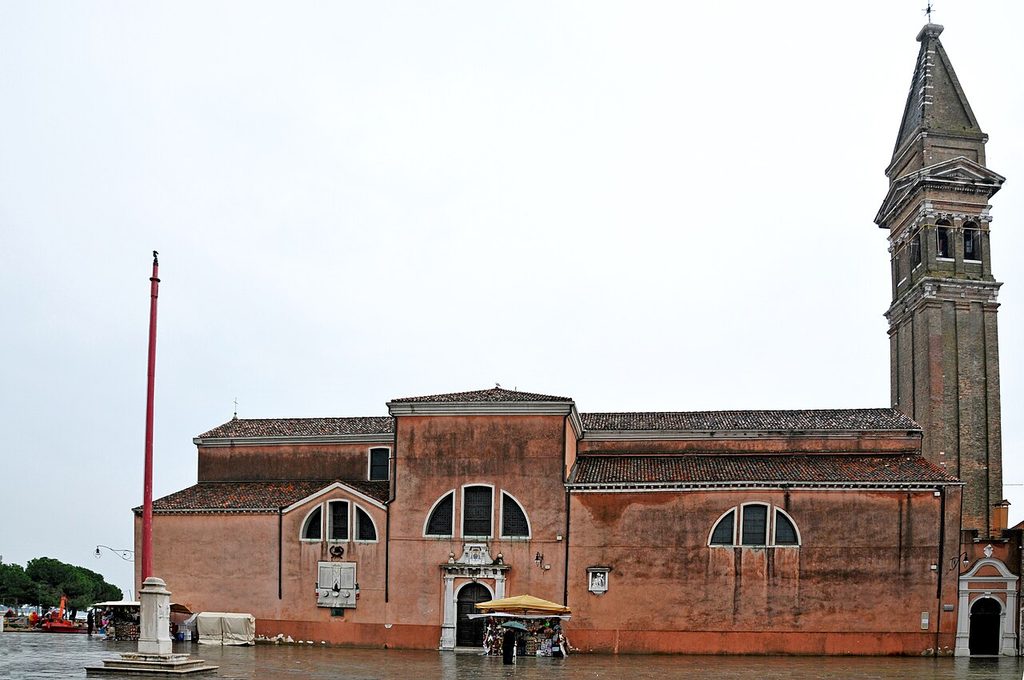
The Church of San Martino is Burano’s principal church. Its interior contains several notable artworks, including a painting of the Crucifixion by Giambattista Tiepolo.
Beside the church stands Burano’s famous leaning bell tower. The tower rises to approximately 53 metres and developed its noticeable tilt because of problems with the soft lagoon foundations. It is now one of the easiest landmarks to recognize from boats approaching the island.
Tre Ponti and the Best Places for Photos
One of the best-known viewpoints is Tre Ponti, where several canals and pedestrian routes meet. From the bridges you can photograph rows of brightly coloured houses in several directions.
Early morning is best for photography because the streets are quieter and the water is often calmer. Late afternoon is another good option, when many day visitors have already left and the lower sunlight gives the façades warmer tones.
Some of the best photographs, however, come from ordinary residential streets rather than famous viewpoints. Walking without a strict route is one of the simplest ways to discover Burano.
Casa di Bepi
Casa di Bepi is one of the island’s most unusual houses. Instead of being painted in a single colour, its façade is decorated with geometric patterns in several different shades.
The house has become a popular photography stop, although it remains part of Burano’s residential environment. It is easy to include during a walk through the central part of the island.
Walk from Burano to Mazzorbo
Burano is connected by a pedestrian bridge to the neighbouring island of Mazzorbo. Crossing takes only a few minutes, but the landscape changes quickly from colourful streets to a greener and much quieter environment.
Mazzorbo has gardens, vineyards and open spaces and receives far fewer visitors. It is worth adding if you have more than two or three hours available on Burano.
How to Get from Venice to Burano
The most convenient public transport option is ACTV vaporetto Line 12 from Fondamente Nove. The boat travels across the northern lagoon, stopping at Murano Faro before continuing towards Burano. The journey from Fondamente Nove normally takes around 40–45 minutes.
If you are staying near Venezia Santa Lucia railway station, you first need to reach Fondamente Nove or travel to Murano and change there. Combining Murano and Burano in one day is easy because Line 12 connects the two islands.
From the San Marco area, reaching Fondamente Nove and continuing by Line 12 is generally the most straightforward option.
How to Get Back to Venice
For most travellers, the easiest return journey is again Line 12 from Burano to Fondamente Nove. From there, you can walk or change to another vaporetto depending on where your hotel is located.
Always check the departure board before staying late for dinner. Evening and night services operate less frequently than daytime boats.
Burano can also be combined with Torcello, which lies only a short boat ride away. A common full-day route is Venice – Murano – Burano – Torcello – Venice.
How Much Time Do You Need?
Allow at least two to three hours for Burano if you want to walk through the main streets, take photographs and visit Piazza Galuppi. Three to four hours is better if you also plan to visit the Lace Museum, have lunch or walk across to Mazzorbo.
Trying to see Murano, Burano and Torcello in only a few hours often makes the trip feel rushed. If colourful streets and photography are your main interests, give Burano the largest share of your time.
When Is the Best Time to Visit Burano?
The best time is early morning, before most organized excursions arrive from Venice. The streets become much busier from late morning through the middle of the afternoon.
Late afternoon is also excellent. As visitors begin returning to Venice, Burano becomes quieter and the evening light works particularly well with its colourful façades.
Spring and early autumn usually offer pleasant temperatures for walking. Summer provides long daylight hours but also brings the largest crowds and the hottest weather.