Mestre is the mainland part of Venice and the place many travelers choose when they want to visit the historic city without staying directly among the canals. It does not offer the same atmosphere as San Marco or Cannaregio, but it has its own center, museums, parks, restaurants and cultural venues — and it is extremely well connected to Venice.
For travelers arriving by train, car or late flight, Mestre can also be more practical than the islands. The key is to treat it as a real part of the trip rather than simply a place to sleep.
For your convenience, the links take you to Google Maps so you can add them to your itinerary.
Why Stay in Mestre Instead of Central Venice?
The main reason is usually price. Hotels and apartments in Mestre are often less expensive than comparable accommodation in the historic center, especially if you want a modern room, elevator, air conditioning or parking. It is also much easier to arrive with large luggage, and travelers with a rental car can stay on the mainland without dealing with Venice’s car-free historic center.

If Mestre and Venice is just the starting point for your trip through Italy, or if you need an international driver’s license right away, take advantage of the offer from our partner, IDA Office*.
*This link contains an affiliate ID.
Mestre is particularly convenient for early trains, late arrivals and trips around the Veneto region. Venezia Mestre is one of northeastern Italy’s major railway stations, while Marco Polo Airport is also easier to reach from the mainland. The trade-off is simple: you will commute into historic Venice each day rather than step outside your hotel directly onto a canal.
1. Start at Piazza Ferretto and Mestre’s Old Center
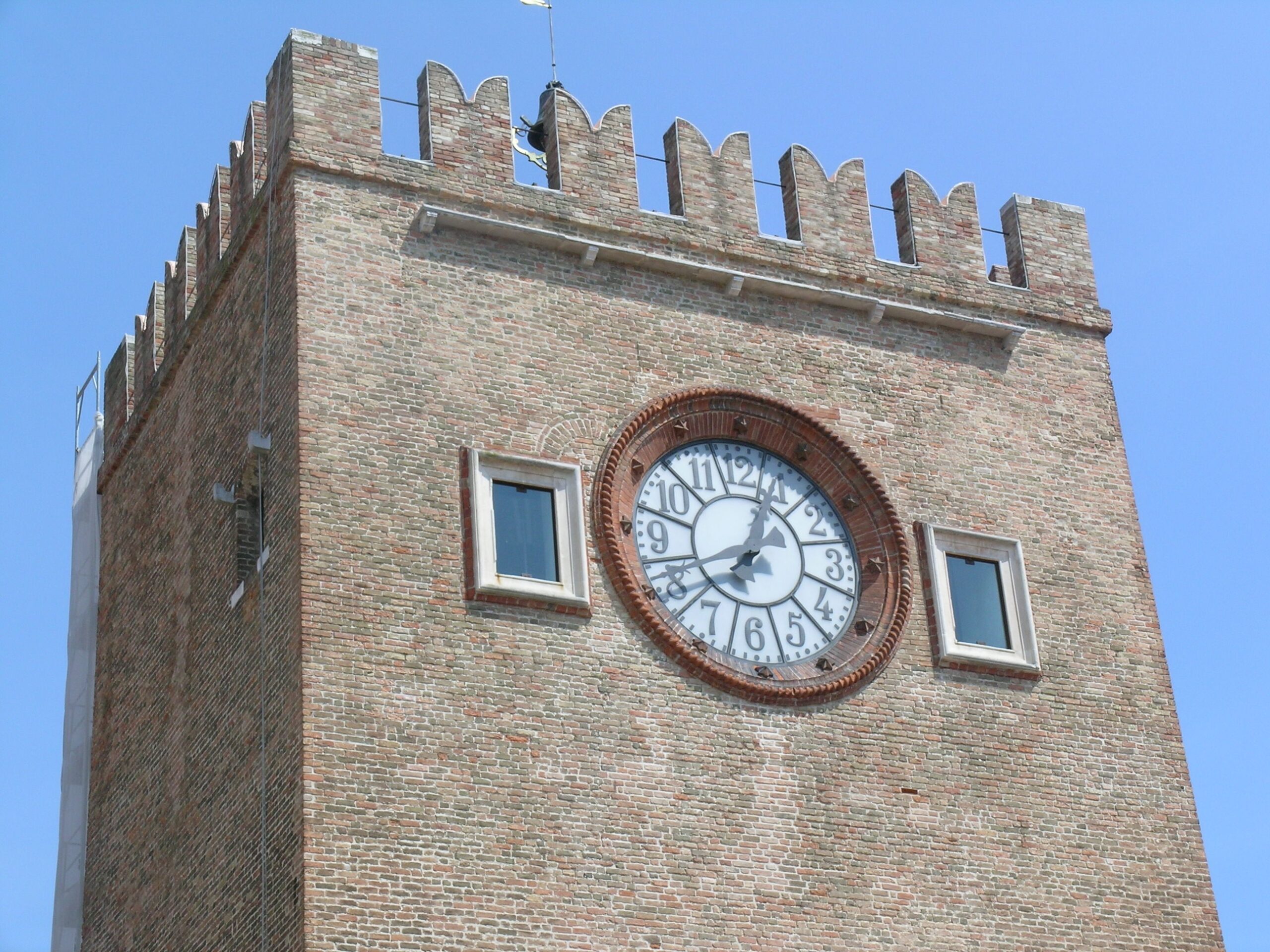
Piazza Ferretto is the heart of central Mestre and the best place to understand that the district is more than hotels around the railway station. The pedestrian square is surrounded by cafés, shops and historic buildings, with the Torre dell’Orologio at its northern end. In the evening it becomes one of the main meeting places for local residents.
From the square, walk through Via Palazzo and the surrounding streets rather than immediately heading back towards the station. This compact center is particularly pleasant around aperitivo time and gives a much better impression of Mestre than the busy roads around Venezia Mestre station.
2. Visit M9, the Museum of the 20th Century
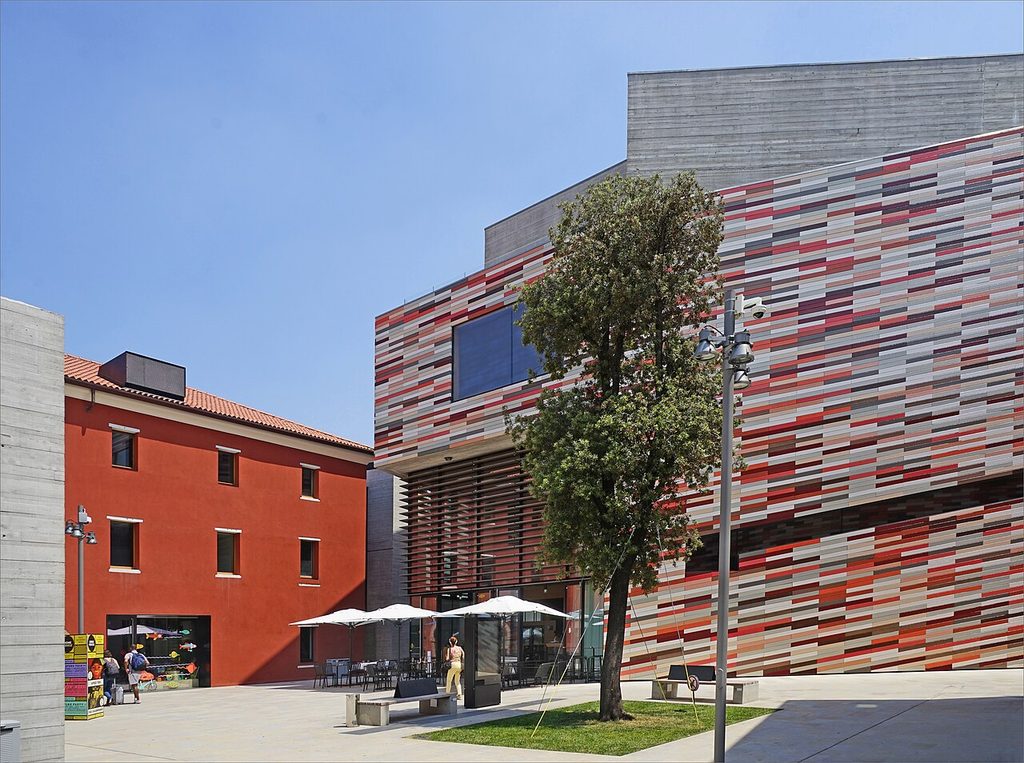
Museo M9 Mestre is Mestre’s most distinctive modern cultural attraction. Instead of focusing on ancient Venice, it uses multimedia displays, photographs, film, sound and interactive material to explain how Italian society changed during the 20th century. The permanent museum is spread across two floors, and temporary exhibitions regularly add subjects ranging from art and social history to technology and popular culture.
The surrounding M9 district is worth seeing as well. Contemporary architecture has been inserted into the older urban fabric, with courtyards, restaurants and bars around the museum. It works particularly well on a rainy day when spending another six hours walking through Venice is less appealing.
3. Walk or Cycle in Parco San Giuliano
Parco San Giuliano is one of Mestre’s biggest advantages over central Venice: a huge open green area beside the lagoon. It has walking and cycling paths, large lawns and wide views towards the Venetian skyline, so it is a good place for a run, picnic or relaxed afternoon away from crowded streets.
The park is particularly attractive around sunset, when Venice can be seen across the water. It is also a useful stop for families because there is far more open space than visitors will find in the historic center.
4. Explore Forte Marghera
Forte Marghera sits between central Mestre and the lagoon and combines military history with modern cultural use. The large 19th-century fortress is surrounded by water and greenery, while former military buildings now host exhibitions, events, cultural spaces and places to eat or drink.
It is easy to combine Forte Marghera with Parco San Giuliano because the two areas are close to each other. This is one of the better places to see the less obvious side of Venice: not palaces and gondolas, but the defensive and mainland infrastructure that protected access to the lagoon.
5. See a Performance at Teatro Toniolo
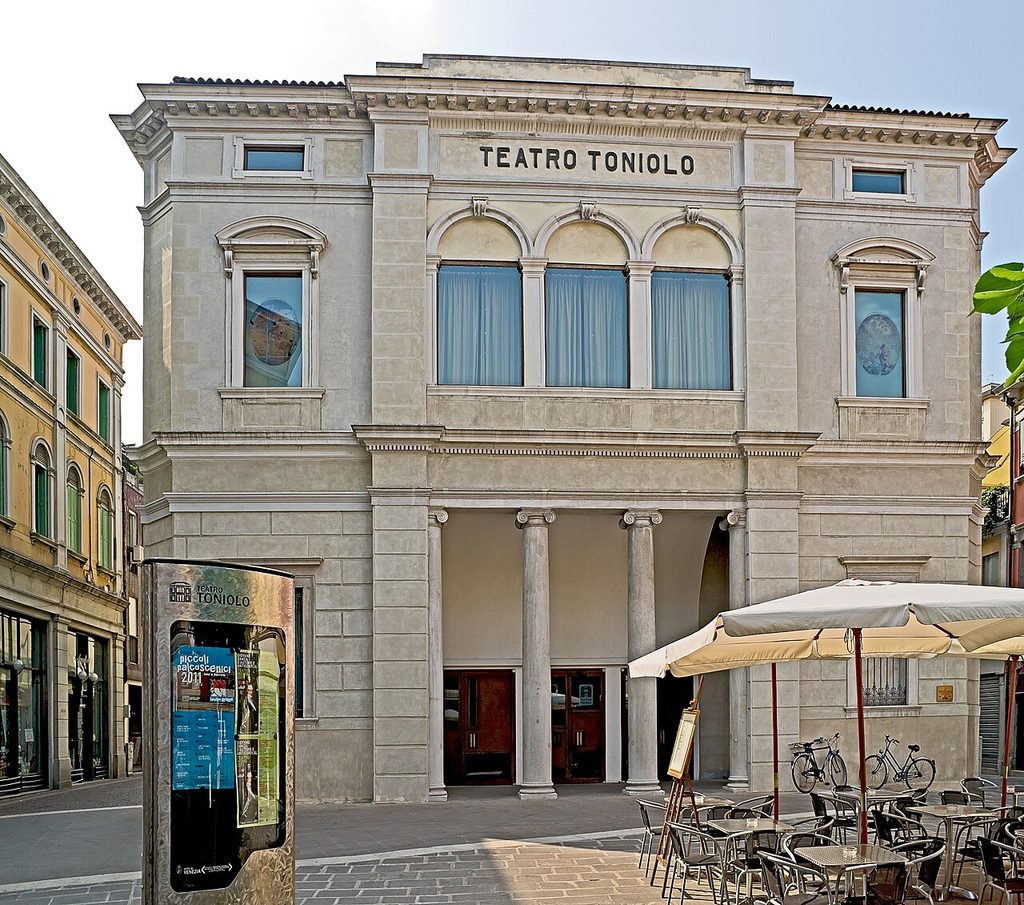
Teatro Toniolo is Mestre’s main theater and concert venue, only a short walk from Piazza Ferretto. Its program includes theater, concerts, comedy and other performances, so it is worth checking the schedule if you are staying in Mestre for several nights.
This can also solve a common problem on longer Venice trips: what to do after a full day of churches and museums. Instead of making another evening trip across the lagoon, you can have dinner in Mestre and see a local performance.
6. Eat and Drink Where Mestre Residents Actually Go
Mestre has a useful advantage over the most visited parts of Venice: restaurants generally depend much more on repeat local customers. One popular choice is Hostaria Vite Rossa, a Venetian restaurant with thousands of reviews and a strong local following. For drinks closer to the center, Ca’ di Màt in the M9 district combines a bar atmosphere with cultural events and stays open well into the evening.
You do not need to hunt for a restaurant with a “Venice view” here. Mestre is better for a normal dinner after sightseeing, often with more space, fewer tourist menus and less pressure to pay for the location.
Getting to Mestre by Train from Other Italian Cities
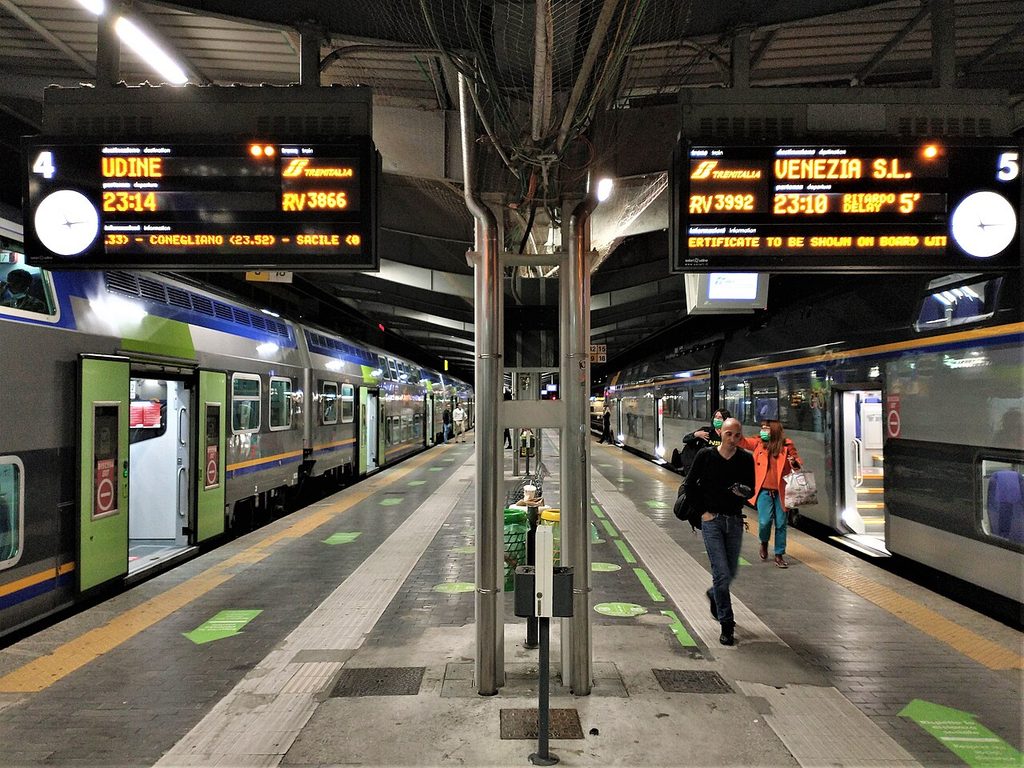
Venezia Mestre is on the main rail routes connecting Venice with northern and central Italy. High-speed trains operated by Frecciarossa and Italo stop here on many services, which means you often do not need to continue to Venezia Santa Lucia if your hotel is in Mestre.
Direct high-speed connections are available from cities such as Milan, Bologna, Florence and Rome. For example, Italo’s Milan–Mestre service takes about 2 hours 15 minutes, while trains from Florence and Rome on the Venice route also stop at Venezia Mestre before continuing across the lagoon to Santa Lucia. Frecciarossa likewise connects Venice with Padua, Bologna, Florence, Rome and cities farther south.
Regional trains make Mestre equally convenient from nearby places such as Padua, Treviso, Vicenza and Verona. Always check whether your ticket says Venezia Mestre or Venezia Santa Lucia: they are different stations.
How to Get from Mestre to Venice
The simplest option from the railway station area is the train. Regional services between Venezia Mestre and Venezia Santa Lucia are extremely frequent, and the ride normally takes about 10 minutes. Santa Lucia station is already inside historic Venice, directly on the Grand Canal.
Public buses also connect Mestre with Piazzale Roma, the road-transport terminal at the edge of historic Venice. ACTV Line 2 is one of the useful routes from the railway station area, while Line 4L connects central Mestre with Venice. Under normal operation, tram Line T1 also links Mestre Centro with Piazzale Roma, although temporary maintenance can lead to replacement buses, so check ACTV shortly before traveling.
If your hotel is beside Venezia Mestre station, the train is usually fastest. If you stay around Piazza Ferretto, a direct bus or tram can be more convenient because you avoid first traveling to the railway station.
One Detail Many Mestre Guides Miss: It Is Actually Part of Venice
Mestre is not a separate municipality next to Venice. It is part of the Comune di Venezia, which has practical consequences for tourists.
For example, when Venice applies its Access Fee on selected dates, guests staying overnight in registered accommodation anywhere inside the Municipality of Venice — including Mestre — are exempt from paying the fee because they already pay the local tourist tax. On applicable days they still need to follow the city’s exemption procedure and obtain the required proof. The 2026 Access Fee period ended on July 26, but this distinction is worth remembering if the system is used again in future years.
This also means that staying in Mestre is different from staying in Padua, Treviso or another independent town outside Venice: administratively, you are still staying within Venice.
Which Part of Mestre Is Best for a Hotel?
There are two particularly useful areas. Around Venezia Mestre station is best for people arriving by rail, making daily trips into Venice or planning early departures. It is practical rather than especially attractive, but the transport connections are excellent.
Around Piazza Ferretto and Mestre Centro is better if you actually want to enjoy Mestre in the evening. You get pedestrian streets, restaurants, M9 and Teatro Toniolo nearby, while buses and the tram provide direct transport towards Venice.
For a short Venice sightseeing trip, the station area may save more time. For three or four nights, central Mestre often provides a more pleasant balance between convenience and having somewhere interesting to go after returning from Venice.
Is Mestre Worth Exploring?
Mestre should not replace historic Venice — and it does not try to. Its value lies elsewhere: lower-cost accommodation, easier transport, parks, local restaurants and a more ordinary Italian urban atmosphere just minutes from the lagoon.
If you are already staying there, it is worth giving Mestre at least half a day rather than treating it only as a railway platform. Piazza Ferretto, M9, Forte Marghera and Parco San Giuliano together make a surprisingly varied route, and the evening can be much more relaxed than another crowded walk between Rialto and San Marco.